
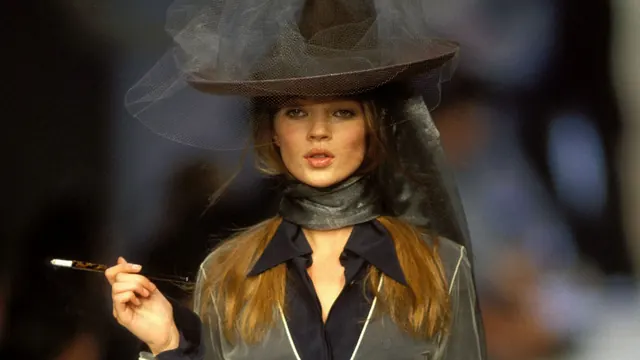
Spooky Season is fast approaching, but the most hardened Halloween fashionistas have been ready for months. While the broader category of costume shoppers will err toward value, a strong luxury and style-led contingent are investing in forever pieces, looking to rare vintage numbers and one-off statement designs to anchor their Halloween look. The caveat? They can wear these items repeatedly throughout the year.
Halloween is big business. According to the National Retail Federation (NRF), 71% of US consumers plan to purchase costumes this year, generating an estimated $4.4 billion across age groups.
Per Deloitte’s 2026 Halloween survey, 92% of US households are looking to participate in the holiday this year. The report found that households intended to spend an average of $219 across retail categories, with 56% of shoppers planning to complete their first purchase before October.
It presents a growing opportunity for fashion brands, provided they address some immediate hurdles: the pre-loved market’s competitive price point and the consumer appetite for costumes with longevity. The RealReal shared that “Halloween costume”, “Halloween dress”, “Halloween bag”, “Coach Halloween” and “Moschino Halloween” are generating high search volumes this year, signaling interest in the fashion-ification of Halloween.
In the mass market, supermarkets, discount stores and costume shops are leading the charge, per Deloitte, however 10% of households cited resale, consignment and thrift stores as the places they expect to spend most.
On TikTok, Halloween fashion is maintaining momentum. As early as August, Vogue Business reported a 93% spike in week-on-week #Halloween posts on the platform, bringing the total hashtagged posts to 37.4 million.
“Niche halloween costume” ideas were already flooding the platform this summer, although luxury has yet to capitalize, with only a handful of brands — Dilara Findikoglu, Matières Fécales, and Rick Owens, for instance — offering the kind of spooky fare that can be worn again or resold.
Part of the allure for fashion consumers is simply the look. Fashion goths — think Gabbriette, Amelia Gray, and Tish Weinstock — are resetting the aesthetic mainstream, taking otherwise dark and creepy aesthetics away from the margins of subculture. Now, being spooky isn’t just a one-off, but a lifestyle.
Department stores are taking note. “Halloween is a celebration of creativity and self-expression — two things that have always been at the heart of Bloomingdale’s,” says fashion director David Thielebeule.
“It’s an opportunity to have fun with fashion, embrace a bit of fantasy and express your personal style in unexpected ways.” He explains that for the store’s luxury shoppers, it’s less about dressing up as someone else and more about enhancing their own look through fantasy, an observation that chimes with the growing trend for investment spooky pieces, rather than fast fashion.
The costume afterlife
While cheaper alternatives remain strong, luxury can make headway, experts agree. “Fashion brands win by owning the hero piece and letting value [brands] own the props around it,” says Ben Harms, chief growth officer at youth culture agency Archrival. “The flex is the one-of-one piece you actually found on your own that you anchor your costume on.”
For Alexis Kwan, a senior creative strategist at Archrival, this high-low blend is symptomatic of Gen Z’s buying power and financial stress as they contend with trends like “cool girl halloween costumes”. As a result, purchases from Depop, Vinted, and The RealReal — corsetry and skirts show momentum — are seen styled alongside cheaper wigs, devil horns, and costume makeup.
For many of the chronically online, Halloween is a big deal, which makes it especially susceptible to the whims of internet culture, memes and blink-and-miss-it references. Often, it’s less about looking scary and more about positioning oneself within the zeitgeist.
In recent years, micro-trends have shifted the playing field. “Gay Halloween” — where the most meticulously niche and camp costume wins — took over 2024, while 2025 turned towards #DIYCostumes, merging creativity and accessibility in visually documented looks and tutorials.
Since, legendary archival catwalk looks are gaining traction online, as are more playful pop cultural fashion moments like actor Hudson Williams’s viral morning-after-the-Met look, or Kim Kardashian’s recreation of her own fashion goth daughter, North West.
These trends have evolved into a more evergreen aesthetic in 2026. Archrival argues that for today’s Gen Zs, every costume must serve beyond the moment, accounting for both resale and use value. To this point, Pinterest UK searches for “chic Halloween costumes” are up 165% year-on-year, with “black lace” (up 130%) and “leather outfit" (up 120%) supporting the trend.
“Retailers can’t beat a thrift store on uniqueness, so they’re competing on what vintage can’t offer: speed and licensing,” says EDITED’s senior retail analyst Krista Corrigan, pointing to Zara’s Halloween edit, which comprises T-shirts, Peter Pan collar separates and everyday staples, many primed with Tim Burton graphics from films including Corpse Bride, Edward Scissorhands, The Nightmare Before Christmas, and more.
“What I find interesting is how the line between a costume and an actual outfit is becoming increasingly blurred,” says Barbara Janeczek, Lyst’s curation manager. “People are shopping for pieces they’ll happily wear long after October 31, putting together looks that work as an outfit first and a Halloween costume second.”
She highlights a rising demand for lace, corsets, tights, and lace-up boots, signaling a romantic and vampy season that chimes with the rise in period dramas, including Wuthering Heights and Sense and Sensibility. While dramatic, many of the pieces used to channel these moods can be incorporated into everyday style, mirroring the coquettish, Victoriana styles purveyed by brands like Simone Rocha, Pauline Dujancourt and Dilara Findikoglu.
With this cinematic turn comes also an embrace of press tour-drobes, prompting fashion shoppers to trial their takes on red carpet looks. Janeczek points to Zendaya’s bevy of looks — archival, couture, and new designs from brands including Matiéres Fécales, Louis Vuitton, and Schiaparelli — worn in the lead-up to Spider-Man and The Odyssey as fair game for shoppers to reference.
Again, these can be seamlessly slotted into consumers’ occasion dressing in a manner that typical costumes cannot.
The runway ghosts
This shift in Halloween’s long-term relevance has been dominated by the vintage sector as gay Halloween ups the caliber of IYKYK references. “Madonna in full Tom Ford Gucci at the 1995 VMAs” was a highlight last year.
Luxury pre-loved marketplace Vestiaire Collective has noticed the shift. Rather than buying a piece to simply create a traditional Halloween costume, consumers are using luxury fashion to create specific characters, runway moments, or pop culture references, shares Gaya Guiragossian, Vestiaire’s style and artistic director.
“There is strong interest in dramatic archive pieces, particularly in ’90s Vivienne Westwood, [Jonn] Galliano-era Dior, Alexander McQueen, Jean Paul Gaultier and Mugler, alongside statement ready-to-wear,” she says. “Rather than looking for something that feels overtly costume-like, shoppers are choosing pieces that already carry a strong visual identity and can be styled into a Halloween look.”
In tune with this archival turn, fabric preferences also reflect turn-of-the-millenium catwalk tropes, with Vestiaire pinpointing velvet, jacquard, draped sleeves, sheer fabrics and striking tailoring as natural complements to gothic, medieval and witchy dressing. The appeal is clear: archival fashion offers shoppers recognizable fashion codes and cultural references, as well as the silhouettes and details that feel spooky or antique.
“Halloween is an excuse for a lot of our clients to treat themselves and add something amazing to their closets that’s maybe a little out of their comfort zone,” says Lauren Lepire, founder of LA-based vintage boutique Timeless Vixen. Catering to VICs and celebrities, Lepire says that her clients are often planning for rarefied parties, and come to Timeless Vixen to source vintage couture pieces that will elevate their look.
“And they are willing to spend because they understand the rarity of these pieces,” she adds, noting that clients can then integrate the look into their closets.
Sarah Jordan Buss, founder of the Vintage Project, another LA-based boutique, agrees, explaining that clients are willing to spend more when they know they can wear it again. “A Vivienne Westwood corset, for example, feels more justifiable when it’s something they can keep in their regular rotation beyond Halloween,” she says, noting a recent shift toward gothic styles, alongside an uptick across archivally coveted brands, such as Moschino, Alexander McQueen and Jean Paul Gaultier.
“I think people are being more intentional about what they buy. Halloween becomes an excuse to add something to their personal archive.”