
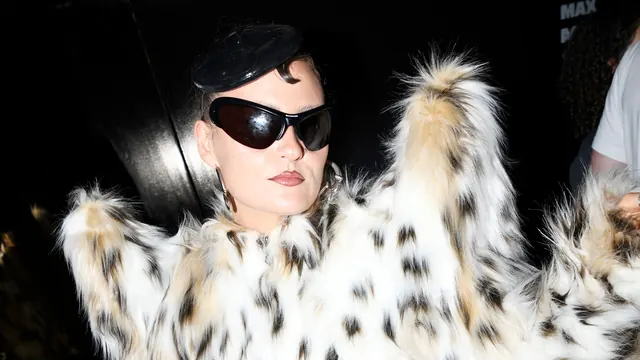
Fashion week without parties would be like a runway without clothes. The shows may be the official business of the week, but once the lights go down, the calendar fills up with store cocktails, intimate dinners, afterparties, brand activations and blockbuster raves — most of the time, all on the same night. In recent years, however, between the endless paid-for invites and choreographed step and repeats, going out can feel like clocking into another job.
This wasn’t always the case. “When I first started in the fashion week world, afterparties were essentially gatherings for the team after the show, and maybe some of the models and friends of the house,” says Tom Burkitt, former music director of London club Lost, which became a notorious fixture of the city’s nightlife scene before closing down earlier this year.
“There wasn’t this whole understanding of ‘a fashion week party’. It was more like, ‘We’ve just done an incredible show, let’s go get pissed.’”
From a brand’s perspective, Burkitt believes the party can offer something the runway cannot, which is perhaps why they’ve ballooned in popularity. “It takes a literal army of people to make these shows happen, and it’s over in 20 minutes.
At least with a party, the DJ plays for about an hour minimum,” he says. “Having a place where you can get a thousand people through the door as opposed to just 200 at a fashion show, that exposes you to 10 times as many people posting about the brand, speaking about the brand with their mates at coffee the next morning, or being a part of it.”
Indeed, the sheer proliferation is a sign of how important the fashion party has become. During London Fashion Week this weekend, attendees had the pick of Vegyn and Kelly Lee Owens DJ’ing at the McQueen afterparty hosted in the city’s Standard hotel, or Kim Petras performing for H&M’s red light-laden dance floor, Labrum’s takeover of iconic underground nightclub Fabric, the cult Anthem karaoke night at sultry cocktail bar Moyagi, Patrick McDowell’s birthday-slash-afterparty, and Topshop’s Thameside affair featuring DJ Fat Tony.
Across the pond, New York also had its fair share of shindigs: Acne Studios hosted a house party with Fcukers’s Jackson on the decks and a stripped-back 070 Shake performance, while at Conner Ives’s party, Lynette Nylander spontaneously took over the DJ booth. There were also big-ticket activations like Bvlgari’s Serpenti Infinito celebration, a new Moncler store opening, Dior’s soirée at Cherry Lane Theater (complete with a performance by cabaret star Justin Vivian) to celebrate its partnership with A24, and a Mythersea party at Café Chelsea.
Yet, as parties become more elaborate and central to brands’ marketing strategies, some on social media have been suggesting that they’re easier to get wrong. Last week, American model and DJ Shaun Ross posted a viral video on Instagram arguing that “the afterparties of fashion week have changed globally”.
After two decades in the fashion industry, he says that “the rooms are not being curated right”, referring to the assumption that a successful guest list is measured in its viral and content potential, instead of a mix of cultural pioneers, muses, editors, socialites, and fashion friends who would traditionally be invited.
Still, it would be wrong to mistake the backlash against the fashion party formula for a lack of appetite for parties themselves. Some of the most-talked-about events prove that people are willing to turn up when the vibe is right.
A problem with curation
Over the phone, Ross argues that the industry has lost some of the knowledge that helped shape these rooms in the first place, as social media circumvented the old routes to knowing the genuine cultural pioneers and tastemakers, who, when brought together, create the atmosphere needed for a good night. There’s now an overreliance on metrics instead.
“They’re worried about numbers. They’re worried about sales.
They’re worried about followers. And they’re not worrying about the curation of anything,” he says.
The problem with that logic is that a large following can make a guest look valuable on paper without necessarily making them useful to the brand or the room.
“What happens now is that you have these brands that spend thousands and hundreds of thousands and millions of dollars on people because of their following list,” Ross says, noting a lot of people who historically earned their way into the room by working the fashion closet or interning with designers have been skipped over. “Yes, there are people following these people because they are inspired by their life.
But at the same time, you are literally putting hundreds of thousands of dollars in front of this said model, influencer or actor that may be new, not realizing that their audience cannot afford the lifestyle that they’re living.”
For Mina Galán, however, DJ and founder of beloved London club night Club Stamina, the problem starts with whether the party makes sense for the brand hosting it. Galán brought Stamina into the fashion world through a Knwls and Nike event, while also DJ’ing at the most recent Courrèges show and planning to play several sets during the upcoming Paris Fashion Week.
“A fashion party should be an extension of what the brand universe is, and I feel that now there’s no real accuracy behind it,” Galán says. Too often, she sees brands defaulting to the same DJs and attendees, adding whoever happens to be “popping” and then filling out the room with influencers for reach.
“Nothing feels genuine anymore, and I think that’s what’s really missing,” she continues, noting that events aren’t necessarily aligning with the brand’s DNA.
“There’s no real tailoring of events. People are just doing events for event’s sake” agrees Burkitt.
“If someone has four or five parties to go to, what is going to make your thing more exciting? What’s the purpose of it?” he continues.
After all, part of Lost’s appeal was having so many things to do. “For Lost, you could have your first five dates with someone in one month — you could meet them on the dance floor, go to a nice secluded cocktail bar, have a chat, go watch something at the cinema during the day, and travel through all these various different stages of intimacy throughout the club.”
“Whereas now, they just get a big warehouse, put a sound system into it, put a free bar in, and then everyone comes, they get their goodie bag, do the step and repeat, have a few cocktails, and then fuck off,” Burkitt adds.
What makes for a good fashion party?
While a big-name DJ, a famous guest list and a spectacular venue can all make for an impressive night, the best parties start with a real community of friends or a world that people actually want to have fun in.
Anthem, the karaoke night founded by Balenciaga creative consultant Fiona Hartley and AllSaints head of marketing and comms Zac Klein, is perhaps the clearest example. The event was initially organized for their own friendship group — with “no expectations” — but has since grown into one of fashion’s favorite nights out, moving between venues and bringing in hosts they admire, with guests ranging from models and designers to students and the people working behind the scenes of the industry.
They are notoriously open to all, though are promoted lightly via their Instagram channels.
“Karaoke is a very democratic playing field for everyone, which I think makes it so appealing to a top model or a CSM student,” says Klein. “It’s so much about mixing with people, and the idea that everyone’s loosely connected.
If I went to a party, I probably wouldn’t talk to you unless someone connected us, and even then it might be really formal. How do you get into a room where you don’t need to have this pretence of, ‘Do we know each other?
I’ve known you on Instagram.’ It doesn’t have to be that awkward.”
“It’s just a nice break for people to have this silly, fun thing that feels low-pressure,” says Hartley. Interest in these alternative formats are partly a reaction to the way fashion’s social life has become increasingly performative. “I just thought we were going to all of these different parties that were exactly the same, but with a different step and repeat.”
Anthem has not abandoned the machinery of fashion party culture entirely; it has simply tried to make it feel more playful. “We always try to approach the coverage in a different way that feels like they’re getting something fun out of it,” Hartley says. “It’s like a little souvenir after, rather than like 10 bad Getty images.”
Another important ingredient for a good party? “Check your phone in at the door,” says Ross. “Everyone is so worried about these viral moments and this viral content that all they do is come with their ring lights, their cameras and their photographers to stage the perfect moment, rather than living the perfect moment.”
It’s a tactic that in part made Lost so famous, but they’re not the only ones. In New York earlier this year, Emily Dawn Long hosted a no-phones disco party at (Sub)Mercer called “No One Dances Anymore”, inspired by a conversation with friends.
Guests covered their phone cameras with stickers and were told to dance rather than network; photographer Daniel Arnold was the only person officially documenting the night. The result was a packed, sweaty basement party.
It’s not to say that big budgets can’t equal big fun. For Ross, they just need to be spent with a bit more imagination.
“I would love to see some of the old-school things, where brands like Marc Jacobs got Lady Bunny to come and DJ, or The Mishapes, people like Venus X, or even those who I feel don’t get the opportunity, like Timmy Regisford and Terry Hunter. Or collaborating with different collectives like Shelter in New York City,” says Ross.
“I want to see more things like that that feel more inspiring. There are so many people out there you could be spending this money on for us to have this iconic performance.
But everyone’s so worried about that instant gratification.”
Instead of buying into whatever name is currently generating the most attention, brands should find someone who can actually give the event a point of view. “What happens is that these brands are spending half a million dollars on this artist that became popular over the past six months,” Ross says, “and now you’re having said artist represent a brand they don’t even know how to pronounce.”
That can also mean collaborating with people and communities whose worlds have a genuine connection to the brand, rather than solely borrowing their audience. The most interesting partnerships are the ones where those different universes can actually overlap, giving the event a reason to exist beyond putting a brand logo over someone else’s party.
When Galán worked with Nike and Knwls alongside Club Stamina, for example, the teams co-built the venue and guest list, rather than treating the party as a ready-made format to which the brands could simply be added. The night brought together DJs VTSS, Slim Soledad and Bapari, with Arca jumping on for a surprise spin.
“We really created the venue, and we really created a proper guest list that worked for everybody — Stamina, but also both Nike and Knwls. And I feel so honored to have been given the opportunity to do so,” she says.
“The identity that Club Stamina has really works well with these brands, because we can integrate all those worlds together.”
For Galán, that shared cultural logic is the whole point: “More than just doing an event for the sake of doing an event, there’s a meaning behind it.”