
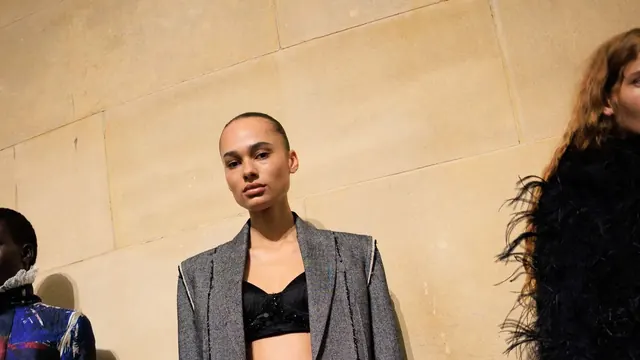
London Fashion Week (LFW) is fast approaching, and the schedule is tight, bolstered with a slew of activations, parties and dinners. Comparative to New York, it’s a lighter load, but the mix of big-ticket shows and emerging independents — many eschewing the runway format for experiential events — continues to position the city as a springboard for hot, young talent and heritage stalwarts.
“We are opening up London Fashion Week to new energy, new ideas and new ways of engaging with fashion,” says Laura Weir, the British Fashion Council's CEO. “Alongside traditional catwalk formats, the schedule features everything from [Californian brand] 5000’s multisensory sound bath to AllSaints’s zine launch.
That breadth is deliberate. London Fashion Week is a global platform for designers and businesses, but it is also a way of demonstrating the wider cultural and economic value of fashion.
By bringing together fashion, art, music, technology, retail, and culture, we are demonstrating the sector’s reach, relevance and ability to create value far beyond the catwalk.”
London fixtures such as Burberry and Simone Rocha will attract buyers, editors and content creators from across the globe, as will the return of Alexander McQueen — led by creative director Seán McGirr — to its native city. Christopher Kane’s Mulberry debut will also create waves among industry figures, putting his creative talent to good use following the protracted closure of his own label in 2023.
“[Christopher’s] creativity has been missed, and Mulberry, which is already building momentum with Gen Z via their handbags, is ripe for a bigger moment,” says Ida Petersson, co-founder of creative agency Good Eggs and former Browns buying director.
“London Fashion Week represents a regrouping of what British fashion means to the UK, and internationally,” says Vogue Runway’s chief critic Sarah Mower. “Mulberry’s hiring of Christopher Kane — a major talent known for his unpredictable takes — adds another layer of anticipation around the subject of how he’ll re-see a much-loved British fashion institution.”
Elsewhere, cross-category retailer Marks & Spencer’s “see-now, buy-now” runway debut, and Barbour’s first on-schedule event at the Saatchi Gallery, have set the stage for a thoroughly British weekend. Among the smaller and midweight labels, Chopova Lowena, Erdem, Ashley Williams, Natasha Zinko, Keburia, Emilia Wickstead, Harris Reed, Knwls, Ahluwalia, Roksanda, and Richard Quinn will hold the fort, while fresher talents such as Aaron Esh — AllSaints’s new creative director — and Paolo Carzana promise standout shows.
Fashion magpies should also look out for new BFC NewGen sponsorees Petra Fagerström, Francesca Lake, and Gui Rosa. Sweden’s Fagerström — a recent Central Saint Martins (CSM) MA graduate and LVMH Prize 2026 finalist — will be debuting on the runway, while Lake and Rosa are doing presentations.
Additionally, a batch of returning NewGen (2026-2027) fund recipients — including Liza Keane, Octi, Charlie Constantinou, Pauline Dujancourt, Ewusie, Johanna Parv, A Letter, Oscar Ouyang, Steve O Smith, The Ouze, and Yaku — will share their latest collections. Plus, talent incubator program Fashion East, which receives continued investment from the BFC, is a perennial highlight, featuring returning designers Jacek Gleba and Traiceline Pratt’s Goyagoma, plus newcomer Mé Mé Yin, a womenswear designer and CSM MA grad.
Also returning to the schedule, upcycling designer Louis Mayhew will stage an exhibition in Fashion East’s new venue, Manor Place.
Other key moments to earmark? Indian minimalist label Lovebirds, womenswear designer Joyce Bao — a Paul Smith Foundation breakthrough — and menswear designer Geordie Campbell are sure to generate some buzz, while off-schedule moments abound. R&M Leathers’s Pornhub-sponsored show will attract the city’s It-girls. Also look out for Jawara Alleyne’s LN-CC activation, Dover Street Market’s jewelry showcase, Saul Nash’s pop-up (open to the public), the Birmingham City University show, and techwear label JL-AL’s presentation.
Vogue Business has also marked its calendar for Ebay’s shoppable show of pre-loved pieces, and H&M’s reimagined show format in collaboration with photographer Nick Knight.
All that to say, London will be a truly varied week, testing out new ways to present collections and go to market at a time when luxury is stabilizing and factors like personalization, experience, and authenticity matter more than ever to today’s discerning consumer.
The high-low
Across the board, experts are hopeful for SS27. “Despite the fact that the international landscape of fashion is drastically altered, [London] is still a city that’s full of people, from emerging talents to established designers to luxury brands and high street companies, who are all playing their part in creating new ways of doing things,” says Mower.
“British-born and -educated designers are very much part of the current business resurgence of high street brands in the UK and internationally.”
Ahead of its 100th anniversary in the fashion sector — and in tandem with an ongoing turnaround plan — Marks & Spencer has been putting out directional collaborations with fashion and streetwear brands, including Bella Freud and Aries, sharing great British designers with a more mainstream audience. Similarly, Esh has been given a design studio for his eponymous label inside AllSaints’s East London HQ.
While he’s showing his own brand on the runway during LFW, Esh has already launched his debut AllSaints FW26 collection with a campaign shot by esteemed photographer Alasdair McLellan.
For some longstanding LFW attendees, this high-low crossover is a reminder of how the British industry previously thrived. “The last time LFW was on a high, Topshop and Topman were very much part of that moment,” says Petersson, recalling the Topman Design collaborations with Jonathan Anderson and Kim Jones, and the Topshop Unique show series walked by Cara Delevingne, Jourdan Dunn and Lily Donaldson.
This season, there’s no show, but Topshop and Topman will throw a party in partnership with Uber, staking the high street’s claim on the British fashion industry once again.
Bosse Myhr, Selfridges’s buying director, is excited. “London’s talent is so diverse and broad, which no other fashion week really can provide,” he says, citing Simone Rocha, Erdem, and Pauline Dujancourt among his scheduled favorites. “The really exciting part is discovering something new.”
The return of British brands like Alexander McQueen and Mulberry, plus some new names, is making LFW more compelling this season. “I have a lot more shows planned for London Fashion Week than in previous seasons, so I’ll be much busier. It definitely feels like a step up and is really promising,” says Brigitte Chartrand, Net-a-Porter’s chief buying and merchandising officer.
Britain to the world
The anticipation around this season is testament to the ongoing work of the BFC and its 2030 strategy, implemented by Weir. The non-profit organization has been more intentional about the important role of LFW.
“British fashion is a global cultural powerhouse and a significant economic driver for the UK, respected worldwide for its cultural impact, innovation and creativity,” says Weir. “The sector contributes £67.5 billion to the UK economy annually and supports one in five jobs in the creative industries.
For us, making the case for fashion means being much clearer about this cultural and economic value – and demonstrating why it deserves sustained investment.”
Weir plans to decentralize British fashion, investing in retail activations and designer trunk shows across the nation, not just in London. This could help the BFC earn sway with Prime Minister (and former Manchester mayor) Andy Burnham’s government, which has also placed decentralizing business and policy high up on the agenda.
For the brands that have watched Britain’s abolishment of duty-free shopping and Brexit eat into foreign fashion spending, as well as the demise of British e-tailer Matches, it’s fitting that a new gameplan is underway. Mower highlights a number of brands inventing business models of their own, based on direct sales, own brand stores and couture customers.
“Erdem has two London stores with more to come abroad. Richard Quinn operates a large bespoke bridal and event dress business for international clients from South London, and Patrick McDowell follows in his footsteps,” she says.
“There’s a realism about business here, which is in no way antithetical to the making of extremely wondrous, fun, and entertaining fashion.”