
Despite its oh-so-French name, L’Oréal is one of those tried-and-true drugstore brands you can find on most pharmacy shelves—and it’s not unusual to see a product in a friend, mother, or auntie’s bathroom cabinet. But with more skin-care options than ever—from niche and luxury brands to medical-grade formulas—do drugstore staples still hold up? And can they deliver the same results as their pricier counterparts?
“Expensive skin-care products may include ingredients that are more difficult or labor-intensive to source, but using accessibly priced products can provide anti-aging benefits too,” board-certified dermatologist Brendan Camp, MD, tells Vogue. Board-certified cosmetic and laser physician Dmitriy Schwarzburg, MD, agrees, adding that price does not necessarily reflect effectiveness.
“Many well-supported ingredients, including retinoids, niacinamide, hyaluronic acid, ceramides, and antioxidants, are available in affordable formulas,” Dr. Schwarzburg tells Vogue.
“With luxury skin care, you’re often paying for packaging, texture, fragrance, or branding. Formulation matters, but a higher price doesn’t automatically mean better results.” Instead, Dr.
Schwarzburg encourages looking at the active ingredients, their concentration, and stability.
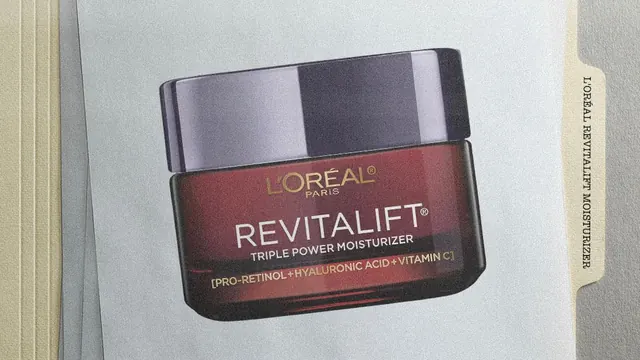
Take, for example, L’Oréal’s Revitalift line and its best-selling moisturizer. Sure, $30 is definitely a bit more spendy than your average drugstore moisturizer—but given its trio of active ingredients, hydronic acid, retinol, and vitamin C, it’s definitely more affordable than its luxury counterparts with similar formulations. Scroll on to discover one writer’s experience testing the bestselling product.
Why We Love It: You don’t have to break the bank for an effective face cream—L’Oréal offers a relatively budget-friendly option that truly delivers. The formula feels impressively plush and decadent, combining hyaluronic acid to boost deep hydration, retinol to smooth skin and target signs of aging, and vitamin C to brighten your complexion. Plus, the super-rich texture makes it an excellent night cream option.
Key Ingredients: Niacinamide, salicylic acid, caffeine, tocopherol, sodium hyaluronate, retinol, vitamin C
Fragrance: Yes (though a fragrance-free version is available)
Finish: Natural
Texture: Rich cream
Non-comedogenic: Mostly—contains two potential pore-cloggers
Size: 1.7 oz.
As with all Revitalift products, the formula blends a trio of active ingredients to bolster anti-aging benefits. Dr.
Schwarzburg notes that the formula is a sensible combination, with each ingredient serving a different purpose. “Hyaluronic acid hydrates the outer layers of the skin, making it feel smoother and temporarily softening fine dehydration lines,” he explains.
Plus, he adds that the brand’s signature pro-retinol (a.k.a. retinyl palmitate) is a mild retinoid derivative, meaning it can help soften texture and fine lines while also being better tolerated by sensitive skin types. Then, of course, there’s vitamin C, a known antioxidant that helps brighten hyperpigmentation.
All in all, Dr. Schwarzburg and Dr.
Camp consider moisturizers’ primary result to be hydration, with some anti-aging benefits along the way—but definitely not an intensive treatment. “Humectants and emollients plump skin by improving moisture levels,” says Dr.
Camp. “By limiting the evaporation of water molecules from the skin surface, these products help to create a more youthful appearance.” The moisturizing ingredients include a blend of glycerin, niacinamide, the aforementioned hyaluronic acid, and dimethicone, which serves as a silicone emollient.
In the least pretentious way possible: I don’t use many drugstore products beyond my micellar water or a last-minute forgotten product run while on a trip. I did more frequently, of course, before testing a plethora of launches and products I’d never dream of splurging on became part of my day-to-day—and that’s a privilege, no doubt!
I agree that price point doesn’t equate to efficacy—and there are just as many affordable options that work similarly to more expensive counterparts.
Revitalift products have been in my mom’s bathroom cupboard for some time. She takes a no-fuss approach to beauty, unlike my more meticulous anti-acne regimen.
On family trips or holiday visits, I’ve dipped into her jar after leaving behind my usual beauty picks. I famously have a baby face, and people often gasp in shock when they learn I’m 30 (which, by the way, guys, no matter what warped sense of women’s value society has brainwashed us into, is in fact still young).
Even on a recent trip to Korean medspa Riko, the 3D skin analysis machine confirmed I scored well below average on premature signs of aging. So, evidently, I’m not worried about anti-aging products.
Still, as Dr. Camp noted, I’m starting to take a preventative approach with my overall routine, and I recently introduced retinol to my nightly routine—which has started to skew my normally oily skin toward dryness.
That’s where the suggestion of L’Oréal’s moisturizer came in—it’s true: When I’ve borrowed it from my mom, my skin has been glowing in the a.m. It’s worth noting that I treat it as a night cream, because I find the formula a bit heavy for my shine-prone face.
Overall, no complaints—the formula certainly does the trick for a rich moisturizer. That said, the formula contains two potentially pore-clogging ingredients, so I would pause on using it if I were managing an active breakout.
Although L’Oréal’s Revitalift line is mainly marketed as a mature-skin product, the pros assure readers it shouldn’t be limited to mature skin types alone. “The best approach to skin care, and health overall, is prevention,” says Dr. Camp. “Using a retinol even at a younger age may help prevent premature signs of aging.”
Dr. Schwarzburg agrees that encouraging us to choose our skin-care products not just based on the age it’s marketed to, but on what your skin actually needs.
Take myself, for example—newly 30 years old. “Thirty can be an excellent age to start addressing hydration, pigmentation, texture, and early sun-related changes,” he says.
“By that point, some patients already have visible cumulative damage, while others are more focused on prevention. Either can be a valid reason to introduce a more targeted regimen.” That said, everyone’s routine should look different, and the expert agrees it depends on a patient’s degree of photodamage, tolerance, and treatment goals.
Dr. Schwarzburg advises against thinking of this moisturizer as a replacement for intensive retinol treatment, and instead as a supportive product.
“Retinyl palmitate is a relatively gentle retinoid and requires several conversion steps before becoming active retinoic acid,” he says. “For mild preventive benefits, it is most certainly enough.
But if I’m treating established fine lines, photodamage, pigmentation, or uneven texture, I would generally prefer a dedicated retinoid such as retinol, retinaldehyde, or, when appropriate, a prescription retinoid.”