
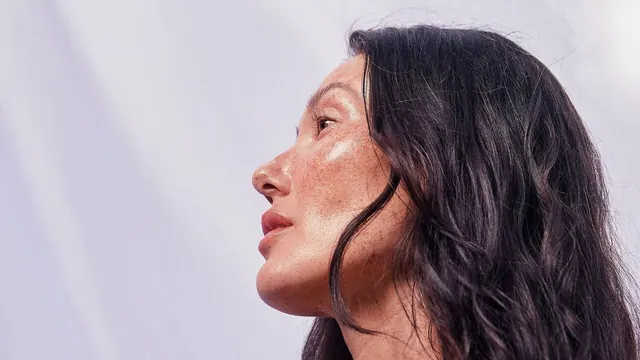
If you’re seeing roughness, crepiness, or otherwise textured skin below the neck, you’re in luck: The best ingredients to firm and smooth the body can make a noticeable difference. While much of the attention has long been focused on the face, more and more brands are now applying time-tested actives, like retinoids and alpha hydroxy acids, to body-care formulas.
These days, retinol body lotions abound, as do body serums that aim to resurface and renew skin on the arms and legs. And they all share the common goal of delivering and maintaining supple, soft skin from head to toe.
In fact, “you can often combine treatment and moisturization in the same step,” says Sarah Sung, M.D., a board-certified dermatologist in Seattle. “Ingredients such as lactic acid and urea are great examples because they can help loosen rough, built-up skin while also improving hydration.”
Vogue’s Favorite Skin Firming and Smoothing Picks:
Best Retinol: Nécessaire The Body Retinol, $65
Best Salicylic Acid: CeraVe SA Lotion for Rough & Bumpy Skin, $20
Best Urea: Soft Services Carea Cream Moisturizing + Softening Body Lotion, $40
Best Botanic-Derived: Osea Undaria Algae Body Butter, $26
Best Argan Oil: Josie Maran Whipped Argan Oil Body Butter, $36
That’s noteworthy, since skin on the body is very different from skin on the face. “The face generally has a higher concentration of sebaceous glands, while areas such as the arms and legs tend to produce less oil and can therefore be more prone to dryness,” says Anetta Reszko, M.D., a board-certified dermatologist in New York, NY.
“Furthermore, neck, chest, skin folds, and recently shaved areas can actually be quite sensitive.” That drier, possibly more sensitive skin means that a moisturizing base isn’t optional.
Keep in mind that topical treatments can only do so much, especially if you’re seeing sagging or very lax skin. “Creams improve texture and mild crepiness, but they won't lift truly loose skin,” says Michael Tassavor, M.D., a board-certified dermatologist in New York, NY.
“And none of it works without daily sunscreen on exposed areas like the chest, arms, and hands.” Only an in-office procedure can truly lift or tighten skin. But even so, topical creams and lotions may still merit a spot on your shelf, even if you see your dermatologist regularly.
“You can do all the in-office treatments you want, but if you ignore what you do to your skin every day, you can undermine those results,” says Dr. Sung.
All to say: Skin care still matters—there’s just a limit on what it can do alone, she says. With that in mind, scroll ahead for the best ingredients to firm and smooth the body.
Retinoids
Retinoids are hard to beat when it comes to firming skin—both for your face and your body. They effectively “tell your skin cells to behave younger,” says Dr. Tassavor. “They switch on collagen production and slow down the enzymes that break collagen down.” That allows them to target a host of issues, from signs of sun damage to changes in skin texture and tone.
Because of that, “patients who notice rough texture, sun damage, fine lines, or early crepiness on areas such as the arms, shoulders, chest, back, thighs, or buttocks can benefit from retinol,” says Dr. Reszko. As with retinoids for your face, start by using a new retinol body product two to three times a week, then add more days if your skin doesn’t seem especially dry or red.
Exfoliating Acids
For rough skin texture, it's hard to do better than regular exfoliation. Chemical exfoliants are especially powerful—namely, alpha hydroxy acids (AHAs) like glycolic and lactic acids. "AHAs work by loosening the bonds between dead skin cells at the surface, allowing them to shed more efficiently and revealing smoother, brighter-looking skin,” says Dr. Reszko.
With steady use, glycolic acid can even support new collagen, too, according to Dr. Tassavor.
For that reason, “it's ideal if your main complaint is rough, bumpy, or crepey skin,” he says, warning that it does make skin more sun-sensitive, so proper sun protection is a must. Lactic acid, for its part, is gentler than glycolic acid.
Moreover, “lactic acid has the added benefit of being a humectant, so it tends to be a nice choice for someone who is both rough and dry,” says Dr. Sung.
Whichever acid you choose, though, they tend to be a good option if you have superficial bumps, like keratosis pilaris, or all-around roughness.
Urea
Urea might just be the unsung hero of body smoothing. But it deserves more time in the spotlight, mostly because “it does two jobs very well,” says Dr.
Sung. “At lower concentrations it draws water into the skin and improves hydration; at higher concentrations, it also helps soften skin and break down thick, rough keratin.” That makes it ideal for very dry, flaky, or scaly areas of the body, like around the elbows and knees, though you can use it all over.
Barrier Support
No body-care routine is complete without moisturizing ingredients—in particular, those that support the skin barrier. “Skin generally looks smoother and plumper when the barrier is healthy and adequately hydrated,” says Dr.
Sung. “A moisturizer can make crepey skin look noticeably smoother because hydrated skin is plumper.” The effect is more fleeting than what you might see with brand-new collagen production, but it still makes a difference on a daily basis—not just in how your skin looks, but in terms of comfort as well.
One ingredient to look for is a ceramide, a lipid naturally found in the skin barrier. “Adding ceramides back through a moisturizer can help reduce water loss and support a healthier barrier, which makes skin feel softer and look smoother and less crepey,” says Dr.
Sung. “They won't stimulate collagen in the way a retinoid can, but they make almost every active in your body-care routine easier to tolerate.” Whatever other ingredients you choose to add, consider the lineup incomplete without a lipid-rich moisturizer.