
Enthusiasm ran high at the Toronto International Film Festival, which concludes this weekend. It pretty much always does at this crowded, crowd-pleasing gathering of movie-lovers and industry types. Feel-good films were on the slate as they always are, like the making-of-Rocky movie from director Peter Farrelly, I Play Rocky, and the follow-up from CODA director Siân Heder, about disability rights activist Judy Heumann, Being Heumann.
But my colleague Lisa Wong Macabasco and I were drawn to darker, spikier fare—and a few standout performances that are sure to dominate awards season. Below are our 10 favorites from a packed few days at TIFF. Release dates are noted, though some have not been announced yet. Put them on your must-watch list.—Taylor Antrim
La Gradiva
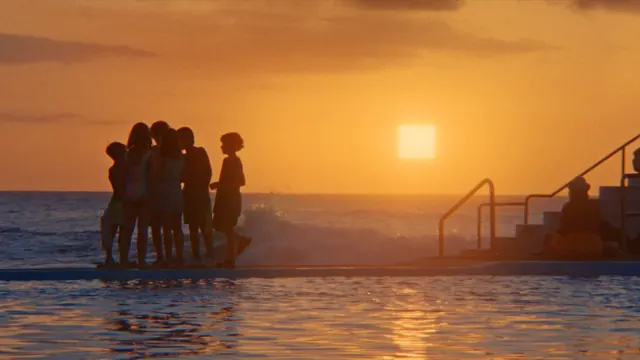
A debut feature from the French cinematographer Marine Atlan, La Gradiva is a coming-of-age movie about a group of Parisian students—rowdy, fun-seeking, anxious about college exams–on a school trip to Pompeii. Watching them explore this ancient part of southern Italy is to feel them on the cusp of things.
They’re in love, underestimated, misunderstood, and the film is full of teenage talk. It has the naturalism of Éric Rohmer—as well as some of Rohmer’s sunstruck beauty.
I was swept away by its loveliness. Three students emerge as protagonists, two troublemaking boys and an outcast girl, who unsteadily becomes their friend.
Atlan, who also wrote the film, has boundless generosity for these kids, and when her gentle story builds towards tragedy, the effect is crushing.—Taylor Antrim
The Unknown
Arthur Harari, the Oscar-winning cowriter of Anatomy of a Fall, has taken the body-swap movie—a genre usually played for laughs—and turned it into an existential freak-out. In The Unknown, withdrawn Parisian photographer David (Niels Schneider) sleeps with the enigmatic Eva (Léa Seydoux) and wakes up in her body.
Harari wisely dispenses with the how; the fun, if that’s the word, is watching every stable idea of identity—gender, family, even one’s own face—begin to unravel. Seydoux is arresting, especially as David discovers that occupying a woman’s body means being perceived—and desired—differently; Schneider is equally compelling as the film’s game of selves grows more labyrinthine.
At nearly two and a half hours, The Unknown may strike some as frustratingly opaque. But its eerie, sensual spell is hard to shake: a deeply unnerving nightmare about just how unstable the self can be.—Lisa Wong Macabasco
The Beloved
Filmmaker Rodrigo Sorogoyen’s The Beloved reframes a movie set as a family battleground. Javier Bardem plays Esteban Martínez, a celebrated Spanish director with a history of violence and excess, who casts his estranged daughter Emilia (Victoria Luengo) in his latest film after 13 years apart.
Ostensibly, it’s a gesture of reconciliation; inevitably, old resentments follow them into the desert. Bardem is terrific at making Esteban’s charm and menace feel inseparable.
He’s a man capable of remorse who nevertheless seems constitutionally unable to stop controlling everyone around him. Luengo, flinty and formidable, gives Emilia’s anger and wary hope equal weight.
Sorogoyen treats their reunion less like a sentimental reckoning than a psychological thriller, asking whether contrition means much without change. The two-plus-hour film occasionally overstays its welcome, yet its prickly father-daughter dynamic remains combustible to the end—a bracing reminder that art can expose old wounds just as easily as heal them.—LWM
Elisnore
Andrew Scott has already left little doubt that he is one of the most exciting actors of his generation—please watch 2024’s Ripley on Netflix if you somehow haven’t—but his performance as Ian Charleson in Elsinore is a thing to behold. The emotional beats of this film, directed by Simon Stone, will not surprise you: it tells the story of Charleson, an actor best known for his star turn in Chariots of Fire, taking on the role of Hamlet at London’s National Theatre in 1989 despite being afflicted with AIDS.
Courage, perseverance, the power of art in the face of death—these are the movie’s themes, and all are handled well. But it’s the raw humanity of Scott’s performance, the humor and fragility and palpable suffering he evokes as Charleson, that pins you in your seat.
Elsinore’s evocation of 1980s London and Charleson’s community of friends and theater colleagues is powerful and Scott’s line readings of Hamlet (a role he performed in London’s West End in 2017) are magisterial.—TA
The Debut
Toronto was buzzing about Julianne Moore’s performance as a suburban housewife turned method actor in Jessie Eisenberg’s community-theater A24 comedy The Debut—and for good reason. Moore is genuinely hilarious in the role, transforming under the tutelage of Paul Giamatti’s world-weary director-character Jerry from a timid mouse into an indomitable and histrionic artist.
Watching two veteran actors spar over such low-stakes material (the musical is called Nosy Neighbors) brought my packed Toronto screening room to hysterics. Moore is a force of nature in what becomes a fablelike comedy about empowerment run amok, and she is surely headed toward a best-actress nomination.—TA
The Liberation
I was gripped by director Guy Nattiv’s film The Liberation, which dramatizes the story of the filmmaker’s grandmother, a Holocaust survivor, who got swept up in an all female commune-cult in the 1980s. Nattiv plays this true-life story out like a thriller—his film is moody and tense—but what gives the proceedings undeniable force is Carrie Coon’s performance as Rita Cooper.
Cooper is a Polish immigrant New Jersey housewife who, step by step, makes the decision to abandon her husband and two teenage children for another life. She’s lured to her choice by Ricki, played by Lily James, a charismatic empowerment guru who sees Rita as a mark, and her hauntedness as a source of vulnerability.
You can’t take your eyes off of Coon, who can be steely and soft, sometimes in the same flickering moment, but the cast around her is superb as well, with stellar supporting performances from Bella Ramsey, Odessa Young, and Tracy Letts.—TA
A Talent for Murder
Pure, seductive fun—Anton Corbijn’s new film is a well paced, sophisticated diversion with a lethal performance at its center: Helen Mirren as Patricia Highsmith. The author of The Talented Mr.
Ripley is at the tail end of her career, holed up in a bunker-like house in the Swiss alps, not writing much of anything, when a young editor, Edward Ridgeway, played by Alden Ehrenreich, is sent by her New York publisher to tease a new book out of her. A spikey pas de deux ensues in the glamorous enclosure of Highsmith’s Swiss dacha, while, in parallel, Ehrenreich’s character pursues a love affair with a beautiful American heiress visiting her family (Olivia Cooke).
Fiction and reality braid in clever ways as Highsmith ridicules her visitor, and is inspired by him, imagining a sinister plot (which could in fact be real). The subtleties of class and ambition that animate Highsmith’s novels also give A Talent for Murder its charged flair.—TA
Everytime
Films about grief have been ubiquitous during awards season, particularly since COVID (perhaps not coincidentally): Drive My Car, All of Us Strangers, A Real Pain, Hamnet, and Train Dreams, to name a few. Early buzz likened Sandra Wollner’s Everytime to 2022’s Aftersun: Not only are both films set at beachside European resorts but they also share a cinematographer, Gregory Oke, a master at precise, emotionally suggestive framing that gestures toward something beyond what’s happening explicitly.
Both films also concern attempts to understand someone who is gone through fragmentary memory, using images as a kind of bridge between the living and the dead. But Everytime is colder and stranger, beginning in observational realism before destabilizing time, point of view, and, eventually, reality.
This visually mesmerizing, shattering film is attuned to the cold indifference of life carrying on after catastrophe, even as grief irrevocably transforms those left behind.—LWM
The Dreamed Adventure
Valeska Grisebach’s The Dreamed Adventure trails Veska, an archaeologist moving through the mountainous borderlands of Bulgaria, Greece, and Turkey, where an encounter with an old acquaintance gradually draws her into an illicit scheme—and back toward a past the film reveals only in fragments. Grisebach toys with the contours of a western, a crime thriller, even a detective story, only to strip them of their familiar momentum.
What remains are glances, silences, and the accumulated texture of lived-in places. Yana Radeva, shockingly a first-time actor, is quietly commanding as Veska, suggesting entire histories without spelling them out, while Grisebach’s documentary-like naturalism makes even the film’s strangest turns feel oddly plausible.
Nearly three hours long, it demands patience, but once you surrender to its languid rhythms, The Dreamed Adventure becomes hauntingly absorbing: a tale of buried histories, compromised loyalties, and how easily an old life can come calling again.—LWM
Tender Loving Care
Nobody has spent more time studying the awkward, funny business of being human than Mike Leigh, and if Tender Loving Care is indeed his final film, it’s an appropriately gentle farewell. Kate O’Flynn (Widow’s Bay) plays Amy, a London social worker newly single and back under the same roof as her best friend Rosie (Alice Bailey Johnson), while worries about her aging parents begin to intrude on everyday life.
There are no grand revelations here, just cups of tea, glasses of wine, difficult clients, bad jokes, old songs, and the small acts through which people keep one another afloat. O’Flynn is marvelous—brittle one moment, wonderfully funny the next—and her easy chemistry with Johnson gives the film its pulse.
Mortality hangs over Tender Loving Care, but Leigh refuses to wallow in it. Instead, this humane, deceptively simple film finds something quietly profound in showing up for other people, even when love can’t protect them from what comes next.—LWM